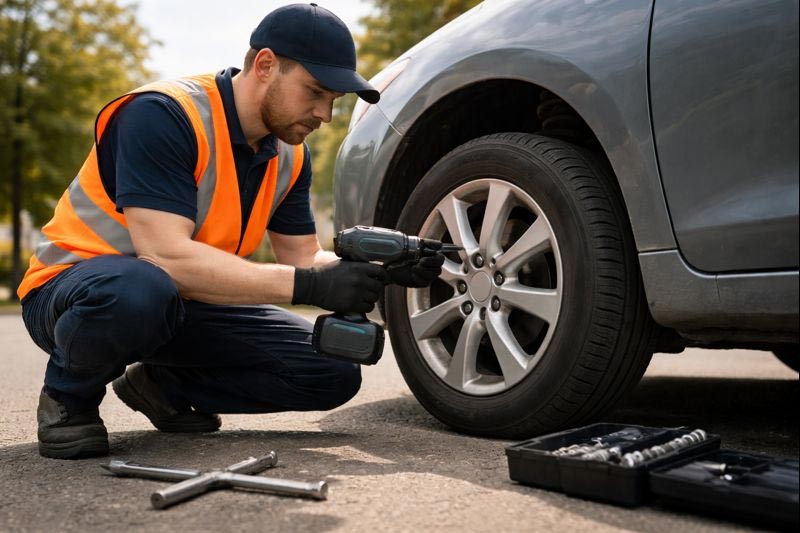
How to Know When Your Tyres Need Replacing: Expert Advice for London Drivers
Tyres are the only point of contact between your vehicle and the road, yet many drivers are unsure when replacement is truly necessary. In a city like London—where traffic is heavy, roads are unpredictable, and braking distances matter—driving on worn or damaged tyres significantly increases safety risks.
Knowing when to replace your tyres helps prevent breakdowns, improves handling, and ensures compliance with UK road regulations. This guide explains the key warning signs, legal limits, and practical checks every London driver should understand, along with when to seek professional help.
Why tyre condition matters more in London
London driving places unique stress on tyres. Frequent stop-start traffic, sharp braking, potholes, speed bumps, and kerb contact all accelerate tyre wear. Even vehicles with relatively low mileage can require tyre replacement sooner than expected.
Worn tyres reduce grip, increase stopping distance, and are far more likely to fail suddenly—especially in wet conditions.
The legal tread depth limit in the UK
In the UK, the legal minimum tread depth for car tyres is:
- 1.6mm across the central three-quarters of the tyre
- Measured around the entire circumference
Driving below this limit is illegal and can result in fines, penalty points, and invalid insurance. However, waiting until tyres reach the legal minimum is not recommended.
Most safety professionals advise replacing tyres when tread depth falls below 3mm, particularly for vehicles regularly driven in London traffic.
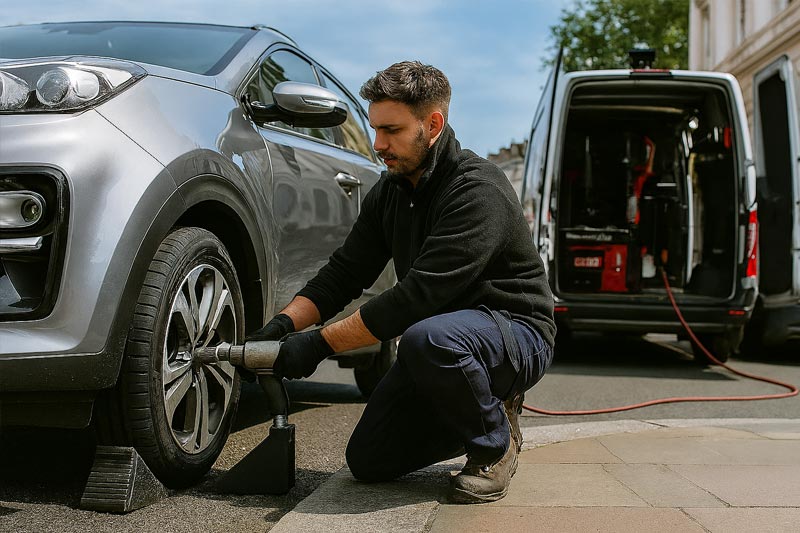
Key signs your tyres need replacing
1) Low or uneven tread depth
Uneven wear may indicate alignment or suspension issues, but it also means reduced grip. If one edge is worn more than the rest, replacement is often the safest option.
2) Cracks, splits, or bulges
Visible cracks in the sidewall, bulges, or bubbles indicate structural weakness. These tyres should be replaced immediately, as they are at high risk of blowout.
3) Frequent loss of pressure
If you are constantly topping up tyre pressure, the tyre may be deteriorating internally or suffering from damage that cannot be safely repaired.
In urgent cases, use Emergency Tyre and Roadside Assistance or call 07889 439224.
4) Vibration or poor handling
Excessive vibration, pulling to one side, or reduced steering response can be linked to worn or damaged tyres, particularly on wet or uneven roads.
5) Tyres older than five years
Even if tread depth looks acceptable, rubber degrades over time. Tyres older than five years should be inspected regularly, and replacement is often advised after six years.
Common causes of premature tyre wear in London
- Kerb damage while parking
- Pothole impacts
- Incorrect tyre pressure
- Wheel alignment issues
- Stop-start urban driving
If you are unsure whether wear is normal or excessive, a professional inspection can confirm whether replacement is required.
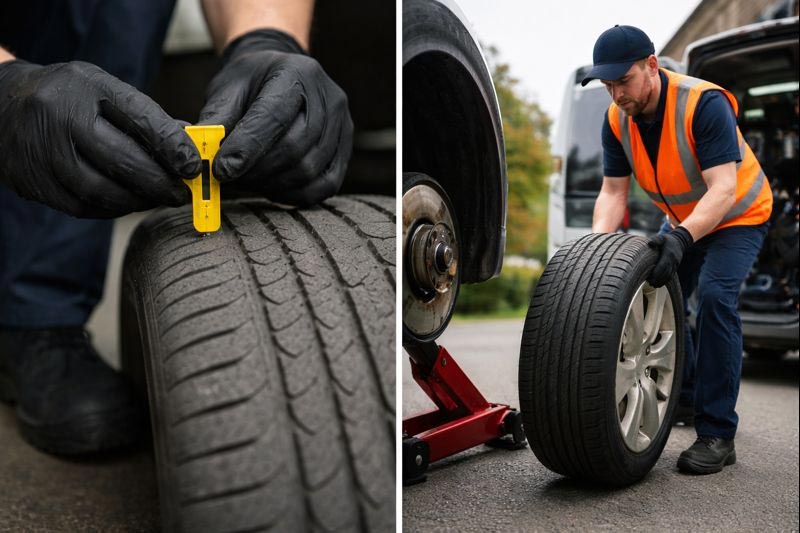
Repair or replace: how to decide
Not every tyre issue requires replacement. Some punctures can be repaired safely, but only under specific conditions.
Tyres may be repairable when:
- The puncture is in the central tread area
- There is no sidewall damage
- The tyre has sufficient remaining tread
Tyres should be replaced when:
- Damage affects the sidewall or shoulder
- The tyre was driven while flat
- Tread depth is low or uneven
- The tyre is ageing or cracked
For a full breakdown of tyre services, visit Our Mobile Tyre Services in London.
Why mobile tyre replacement is ideal for London drivers
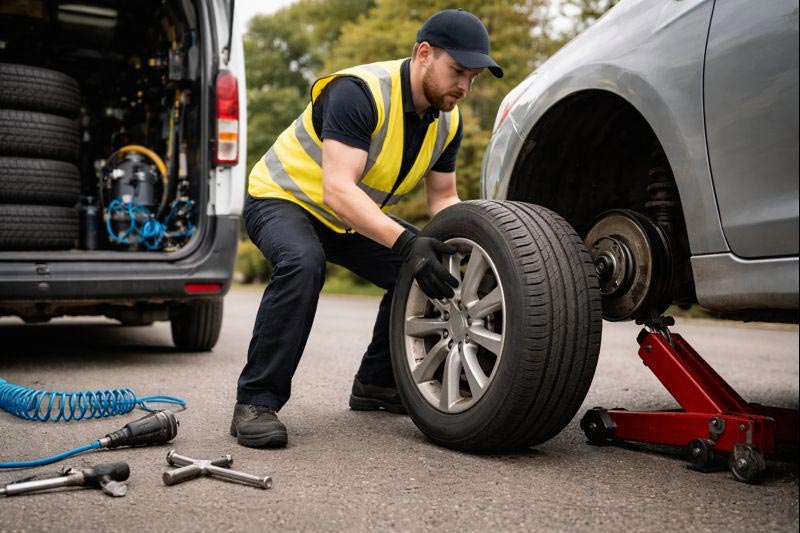
Replacing tyres does not need to involve garage visits, waiting rooms, or lost time. Mobile tyre fitting brings professional service directly to your location—home, workplace, or roadside.
Benefits include:
- No driving on unsafe tyres
- Time-saving convenience
- 24/7 availability
- London-wide coverage
BNM TYRES offers mobile tyre replacement across all boroughs. See Our London Coverage Areas for details.
How often should tyres be checked?
As a general rule:
- Check tyre pressure monthly
- Inspect tread depth every few weeks
- Inspect tyres before long journeys
- Have tyres professionally checked if the vehicle feels unstable
Early checks reduce emergency breakdowns and improve safety.
Frequently asked questions
Is it illegal to drive with worn tyres?
Yes. Driving below the legal tread depth is illegal in the UK and can result in fines and penalty points.
Do all four tyres need replacing at once?
Not always, but replacing tyres in pairs (especially on the same axle) is often recommended for balanced handling.
Can mobile tyre replacement be done at night?
Yes. BNM TYRES operates 24 hours a day across London.
Which areas do you cover?
All London areas are covered. See Coverage Areas.
Conclusion
Replacing tyres at the right time is essential for safety, performance, and legal compliance. If your tyres show signs of wear, damage, or age, acting early can prevent breakdowns and costly repairs—especially in London’s demanding driving conditions.
Professional assessment and mobile tyre replacement provide a safe, convenient solution without unnecessary disruption.
Call to action
If you are unsure whether your tyres need replacing, or you require immediate mobile tyre fitting in London, contact BNM TYRES today.
Phone: 07889 439224
Email: info@bnmtyres.co.uk
Address: 26 Moss Hall Grove, N12 8PB, London
Opening hours: Open 24 hours
For bookings and urgent requests, use Contact Us or Emergency Services.