
How Often Should You Replace Your Tyres in the UK?
Tyres are one of the most important safety components on your vehicle, yet they are often overlooked until something goes wrong. Many drivers ask the same question: how often should you replace your tyres? The answer depends on several factors, including mileage, driving style, road conditions, and tyre age.
This guide explains when tyres should be replaced in the UK, what warning signs to look for, and how to avoid driving on unsafe or illegal tyres.
The Legal Tread Depth Limit in the UK
In the UK, the legal minimum tread depth is 1.6mm across the central three-quarters of the tyre and around its entire circumference. Driving below this limit is illegal and can result in fines and penalty points.
However, many tyre experts recommend replacing tyres before they reach 1.6mm, especially if you regularly drive in wet conditions. Reduced tread depth significantly increases stopping distance.
Average Mileage Before Tyre Replacement
On average, standard car tyres last between 20,000 and 40,000 miles. However, this range varies depending on:
- Driving habits (aggressive acceleration or braking)
- Road conditions
- Vehicle weight
- Tyre quality and brand
- Wheel alignment and suspension condition
Urban driving in London, with frequent stopping and starting, can reduce tyre lifespan compared to steady motorway driving.
Tyre Age – Even If Tread Looks Fine
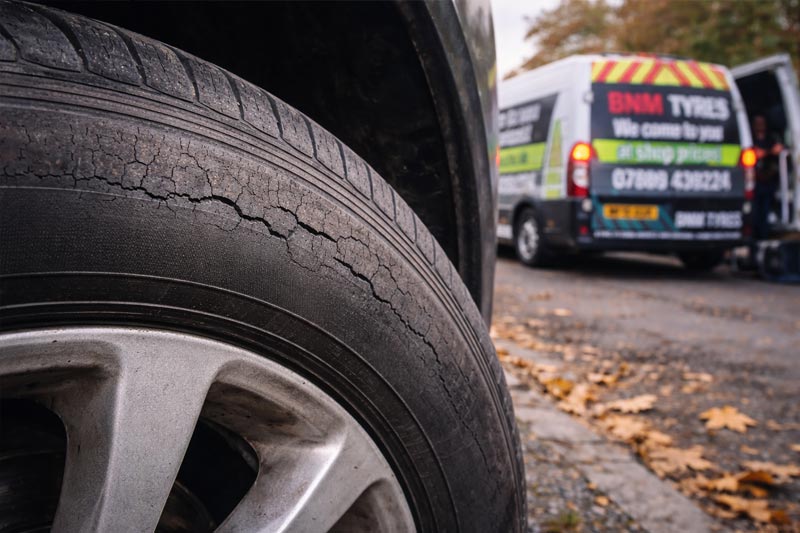
Tyres degrade over time, even if the tread depth remains acceptable. Most manufacturers recommend replacing tyres after six years, regardless of mileage.
Rubber hardens as it ages, reducing grip and increasing the risk of cracks or sidewall failure. If your tyres are over six years old, professional inspection is strongly advised.
Warning Signs That Your Tyres Need Replacing
- Tread depth close to 1.6mm
- Cracks in the sidewall
- Bulges or blisters
- Frequent pressure loss
- Uneven wear patterns
- Vibration while driving
If you notice any of these issues, it may be time to arrange a professional inspection. You can explore available options through our mobile tyre services.

Seasonal Considerations in the UK
Cold weather reduces tyre pressure naturally, while heavy rain increases the risk of aquaplaning. Tyres with low tread depth struggle to disperse water effectively, making replacement before winter particularly important.
Is It Safe to Replace Just One Tyre?
In some cases, replacing a single tyre is acceptable. However, if the remaining tyres are significantly worn, replacing them in pairs is often safer for balanced handling and braking performance.
What Happens If You Delay Tyre Replacement?
Driving on worn tyres increases stopping distance, reduces cornering grip, and raises the likelihood of punctures. In emergency braking situations, even a small reduction in tread can make a significant difference.
If you believe your tyres may be unsafe, you can contact BNM TYRES or call 07889 439224 for advice.
Mobile Tyre Replacement at Your Location
If your tyres need replacing, BNM TYRES offers on-site fitting across London. Our technicians bring the necessary equipment directly to your home, workplace, or roadside location.
For urgent situations, you can use our emergency tyre services. To check whether we operate in your area, visit our coverage areas page.

Frequently Asked Questions
How many years do tyres last in the UK?
Most tyres should be inspected annually after five years and replaced around six years, depending on condition.
How do I check tyre age?
Look for the DOT code on the sidewall. The last four digits indicate the week and year of manufacture.
Can I drive with 2mm tread depth?
It is legal above 1.6mm, but replacing before reaching the limit is safer, especially in wet conditions.
Need Professional Advice?
If you are unsure whether your tyres need replacing, our team is available to help.
Phone: 07889 439224
Email: info@bnmtyres.co.uk
Open: 24 Hours
Learn more about us on the About Us page, browse expert advice in our blog, or return to the BNM TYRES homepage.